Open source
Contextual Relational Intelligence™ is free, and it will be open source.
The CRI Engine and SDK will be published under the Apache License 2.0 at CRI 1.0, first-class for Godot (2D and 3D), Unity, Unreal and web/TypeScript. Your own engine connects through the C API.
njacobx / Contextual-Relational-Intelligence
Give artificial characters a past. Let it shape their future.
- Price
- Free
- Licence
- Apache License 2.0, at CRI 1.0
- Code
- Arrives with CRI 1.0
- Contributions
- Open at 1.0, with a Contributor License Agreement
01 Today
The repository holds the plan. The code arrives with CRI 1.0.
Today you will find the README, the architecture diagrams and the roadmap. Star it to follow along.
- The README What CRI is, how it fits into a game, and the research behind it.
- The architecture diagrams How events reach a character, and how intentions return to your game.
- The roadmap Seven stages, from Foundation, where CRI is today, to a managed service.
Hear the day it lands
- Watch. Open the Watch menu on the repository.
- Custom. Choose Custom.
- Releases. Tick Releases, and GitHub tells you the day it lands.
Or star it, and it stays on your list.
02 CRI 1.0
CRI 1.0 is the first public release.
The Engine and SDK, with samples, documentation, a stable API and migration support.
The CRI Engine and SDK are planned for release at CRI 1.0 as open source under the Apache License 2.0, first-class for Godot (2D and 3D), Unity, Unreal and web/TypeScript.
There is no closed preview, alpha or pilot before it. The open-source release is the first time developers outside LuminidsAI can build with CRI.
Release targets and supported platform details are published as development progresses.
First-class at 1.0
- Godot
- 2D and 3D, through native integration and GDExtension
- Unity
- A C# SDK over the native runtime
- Unreal Engine
- A native C++ SDK
- Web and TypeScript
- WebAssembly and service integration
- Your own engine
- Direct integration through the C API
03 How it is built
A native core with a C API underneath every SDK.
The Engine is a native C++ core. Its C API is the foundation every engine’s SDK grows from.
Your game keeps its own systems. CRI works alongside your gameplay code, character controllers and any language model you choose, and holds the history that shapes what each character does next.
Execution is deterministic, so the same inputs reproduce the same decision, and the recorded reasons behind every decision can be inspected.
See the architecture diagram (opens github.com) How a character forms a point of view

- Your game Provides the world, its events and the actions available to each character.
- The CRI Engine Keeps each character’s state, interprets what reaches them and weighs their decisions.
- Your game again Receives the intentions, carries out the actions and reports what happened.
04 Licence and contributing
Apache-2.0 at 1.0. Contributions open with a CLA.
Free to study, modify and extend, including for commercial use in your own products.
The Engine and SDK will be released under the Apache License 2.0, one of the most widely used permissive open-source licences. You can build on CRI without opening your own code, and without asking us first. The final grant follows an ownership, dependency and intellectual-property review; until then, the material in the repository remains all rights reserved.
Contributions open when CRI 1.0 ships, under a Contributor License Agreement. The agreement confirms you have the right to contribute your work and licenses it to the project, so CRI stays under one clear licence. Until then, issues are limited to collaborators, and questions come to us directly.
What Apache-2.0 gives you
- Commercial use
- Ship CRI inside a paid game or product, with no fee and no royalty.
- Change and share it
- Modify the source, and distribute your own version.
- A patent licence
- Every contributor grants a licence to the patents their contribution uses.
- What it asks
- Keep the licence and its notices with the code, and mark the files you change.
- The name
- No trademark rights. Contextual Relational Intelligence™ is a trademark of NJX Technologies Ltd.
05 Sponsor
Help fund the road to CRI 1.0.
If you’d like to help fund its development, you can sponsor it through GitHub Sponsors.
The goal: 50 monthly sponsors helps fund CRI’s Unity and Unreal integrations for 1.0.
Sponsorship is community support for the free project, separate from how LuminidsAI is funded: it brings that work forward.
Monthly from $5, or a one-time gift from $10. Sponsorship is entirely optional, and simply helps the work continue.
What sponsorship funds
- The Unity and Unreal integrations
- Documentation and samples
- Testing across engines
- Keeping CRI free
06 Where it began
Built first inside Luminids.
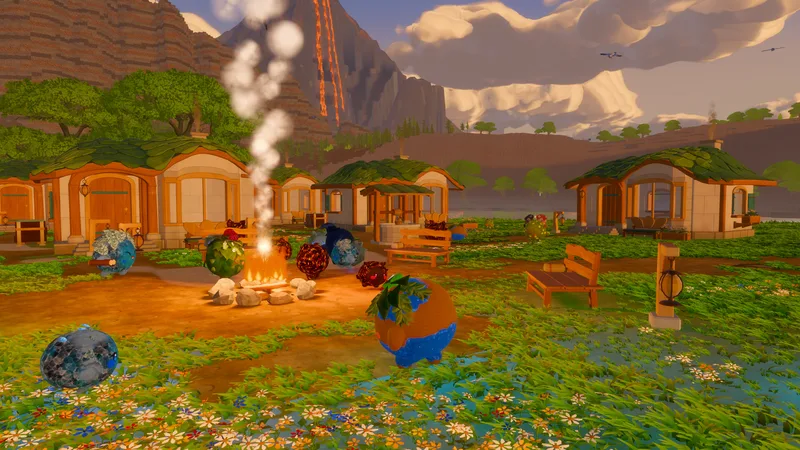
CRI began as the cognitive technology behind Luminids, a cozy colony adventure where every little creature has its own memories and relationships.
Luminids is customer zero, where CRI has to survive saves, frame budgets and real player behaviour.
Luminids itself is a separate game, with its own site and its own Steam page.